A Deep Dive into Cobalt Strike Malleable C2

· 11 min read
Joe Vest
Red Team Operator & Author

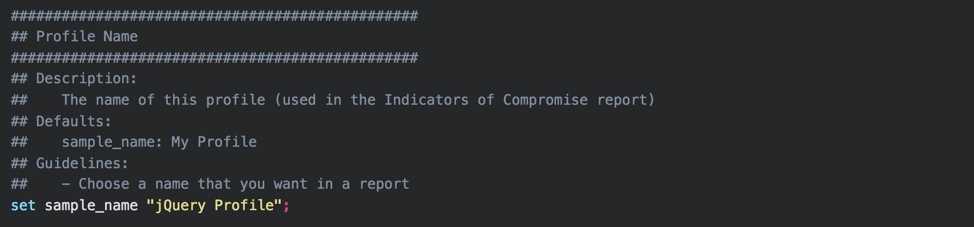
One of Cobalt Strike's most valuable features is its ability to modify the behavior of the Beacon payload. By changing various defaults within the framework, an operator can modify the memory footprint of Beacon, change how often it checks in, and even what Beacon's network traffic looks like. All of these features are controlled by the Malleable C2 profile, which is chosen when starting the team server.

Threat Gets A Vote: Applying a Threat-Based Approach to Security Testing

· 16 min read
Joe Vest
Red Team Operator & Author

Designing, deploying, and managing a comprehensive security program is not an easy task. An organization's security design is influenced and pressured from multiple, often competing, sources. This includes customers, compliance, management, peers, budget, public opinion, and news. This process is complex and challenging, but an organization is generally able to overcome the pressures and implement what is considered to be a robust security program. An organization is able to please the various parties and, at least on paper, describe a strong security program designed to stop malicious cyber-attacks. Audit and compliance checks pass with a green light. Robust patch management systems are deployed. Vulnerability assessments and penetration tests are conducted. In general, the organization has good security hygiene. These are all great steps in defending a network from attack, but unfortunately, often fall short in achieving the primary goal of preventing, detecting, and responding to real threats. Why? What is missing? The real question to consider is:

Threat Mitigation Strategies: Part 2

· 37 min read
James Tubberville
Red Team Operator & Author

The following information was composed by Andrew Chiles (@andrewchiles), Joe Vest (@joevest) and myself (@minis_io) for quick and easy reference. Much of it was pulled together from a variety of sources with attempts to provide references for each. This post is intended to be more of a brain dump rather than a complete technical breakout.

Automating Apache mod_rewrite and Cobalt Strike Malleable C2 Profiles

· 4 min read
Joe Vest
Red Team Operator & Author

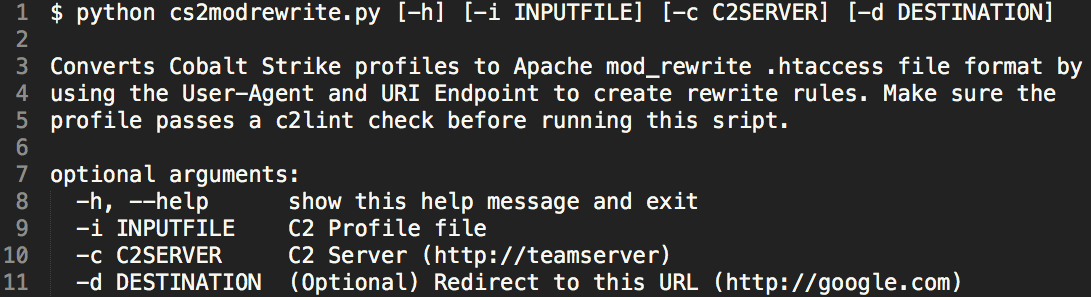
This post describes a script I created to convert a Cobalt Strike Malleable C2 profile to corresponding mod_rewrite rules to enable intelligent HTTP proxying for redirection of C2 traffic. The script automates the process described by well known redteamer and now co-worker – Jeff Dimmock (@bluscreenofjeff). Intelligent use of C2 redirectors is core to a mature C2 architecture that can withstand some gentle investigation and prodding. Developing Cobalt Strike compatible mod_rewrite rules to redirect traffic is not incredibly difficult, but there are a few Apache "gotchas" and the process can be error prone when dealing with multiple C2 profiles. Automation improves consistency and reduces the time needed to spin-up, test, and troubleshoot a unique and layered C2 infrastructure. It is always nice to start from a known good.

Threat Mitigation Strategies: Observations and Recommendations

· 23 min read
James Tubberville
Red Team Operator & Author

Full disclosure: This post is heavy on text. Much of the content is very broad and uses simplified examples. There are literally thousands of extremely cool and interesting ways to limit threat activity; however, I've decided to simplify and focus on those that could have the most significant impact with relatively easy implementation. Enjoy!

HostEnum: Updates and Usage Guide

· 4 min read
Andrew Chiles
Red Team Operator

HostEnum (formerly Invoke-HostEnum) has received some much needed attention in recent weeks and a new version is now available on the ThreatExpress Github (formerly https://www.github.com/minisllc). I've renamed the tool to simply HostEnum since it's actually a large collection of enumeration functions which are now individually called by the Invoke-HostEnum wrapper function. It's designed to provide a quick means of generating a comprehensive system profile and I've found it extremely useful for both offensive and defensive perspectives. Recent improvements include a breakout of enumeration functions, a transition from string output to objects for improved formatting and reporting capabilities, new enumeration checks, and addition of privilege escalation checks from @harmj0y's PowerUp.

Empire – Modifying Server C2 Indicators

· 6 min read
Andrew Chiles
Red Team Operator

Overview

This post is intended as a follow-on to Jeff Dimmock's detailed write-up on creating communication profiles for Empire. Empire 1.6's “DefaultProfile” setting for modifying C2 indicators doesn't directly allow modification of the server-side parameters. When faced with an experienced group of defenders, default C2 server indicators can quickly reveal your infrastructure. HTTPS listeners with valid certificates can certainly hinder traffic monitoring, but isn't a silver bullet.

HostEnum - A PowerShell Host Situational Awareness Tool

· 5 min read
Andrew Chiles
Red Team Operator

Overview

During a Red Team engagement, performing detailed Situational Awareness (SA) or enumeration on initial and subsequent host compromises is vital. Every good pen-tester or red teamer has their list of go-to scripts, commands, or "pasties" to run once initial shell access is achieved. The goal is to quickly learn as much about your environment as possible; including defenses, system configuration, interesting files, and opportunities for persistence and lateral movement. Moreover, when working in large and/or distributed teams, a common tool-base and procedure set is crucial to ensure that necessary enumeration is accomplished no matter who's behind the keyboard.